Want to start innovating in agrifood?
Will is happy to help you


Innovation offers many new opportunities, but it also carries risks. At QING, we stand for controlled innovation. We do that with the Development Roadmap: in controlled steps we come to a solution for your issue. We help you gain more control over the innovation process, possible risks and costs. We also work on support within the organization.
.png)
The innovation session with Exter resulted in a Development Roadmap that will provide insight into the concrete next steps for a new dream factory!
"We didn't know we needed QING until we talked to them," he said.

Every company is aware of the risks during an innovation process, think: wasted time, unnecessary failure costs and insufficient capacity. This is what you want to prevent. As a company, you experience doubts and are left with the following questions:
Every company is aware of the risks during an innovation process, think: wasted time, unnecessary failure costs and insufficient capacity. This is what you want to prevent. As a company, you experience doubts and are left with the following questions:

Why is innovation important? There are several reasons why a company might want to innovate. In the agri-food sector, digital innovation is seen as a must. This sector faces certain challenges: rapidly growing demand for food, labor shortages, and ever-changing consumer demand.
For example, an innovation strategy can be used for process optimization, product development, testing a new idea, or increasing a competitive advantage.
You can innovate in a controlled manner with any challenge—no matter how complex it is. Suppose you only need one productive day for this, and within four weeks, you’ll have control over and visibility into the entire innovation process. Would you consider that?


Controlled innovation is achieved with the Development Roadmap. With this innovation strategy, you ensure yourself of the best start. From a total overview of the core of your problem to how you arrive at the best solution.
Controlled innovation is achieved with the Development Roadmap. With this innovation strategy, you ensure yourself of the best start. From a total overview of the core of your problem to how you arrive at the best solution.


Once the innovation session is over, we’ll get started on the Development Roadmap. After the Development Roadmap is finalized, you’ll decide what the next step is. Once the innovation plan is in place, we can provide the right tools, such as: research, proof of concept, or digital twin & simulation.
We make sure that, during the innovation process, you keep control and insight, but you decide. Cooperation at the partner level instead of client and taker. This also increases your own organisation's innovative power and level of knowledge.
We use Agile Development in many of our innovation projects. With this approach, we break the problem down to its core and divide the project into short sprints. This allows you to maintain control over progress and costs, while avoiding unforeseen risks, challenges, and failure costs.

We are a market leader in innovative digital solutions for the agri-food sector, with a high success rate. We use a proven methodology that is highly valued by our clients.
With our approach, we go back to the core of your problem and then move forward. Forward engineering. With our own Development Lab and technological expertise, we can also implement and facilitate the Development Roadmap.
We have everything in-house for your innovation process. This includes access to technologies such as Vision AI, Data, Machine Learning, Digital Twin, and Simulation.
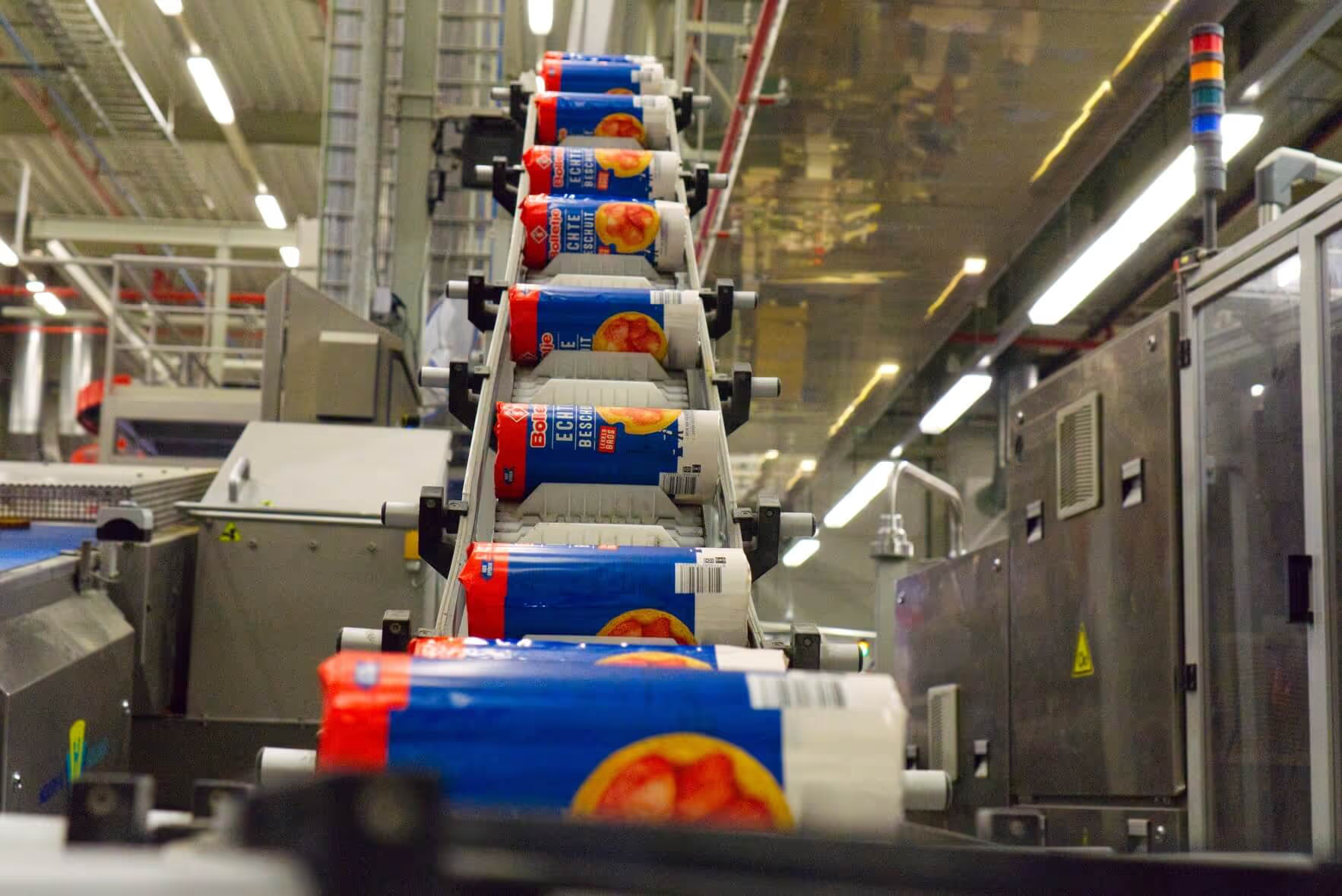
“It was a very successful morning with a clear roadmap. The structured approach and the team discussions, along with their outcomes, gave everyone food for thought. I’m very curious to hear QING’s recommendations.”
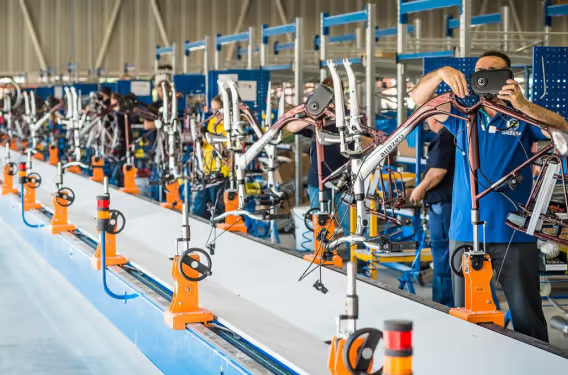
"The innovation session provided a good overall picture of the process—which we want to (semi-)automate—as well as its limitations and complexity. Based on that overall picture, we came up with six alternatives, two of which were later developed in detail by QING."
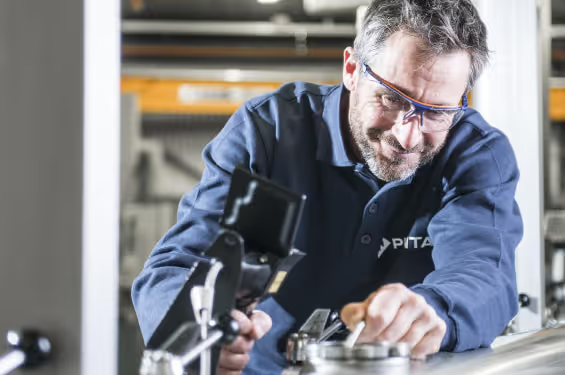
“QING helped us visualize manufacturing concepts through simulation in both 3D and KPIs. This enabled production employees and managers to actively contribute to the development process.”
"The joint effort resulted in an 80+% reduction in 'non-value-added' labor and a 20% increase in customer value, while fostering a sense of ownership throughout the organization."
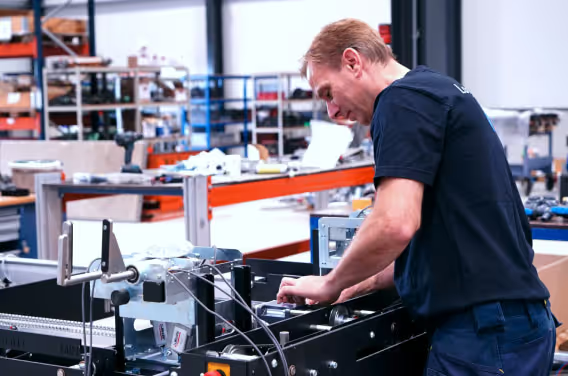
"The session gave us insight into what we need to focus on in the beginning in order to be successful in the long run."
Will is happy to help you