



Please provide your contact information, and we'll get back to you shortly.
Thank you!
We'll get back to you about this within a few business days.
Oops! Something went wrong while submitting the form.


The food industry isn’t always at the forefront when it comes to adopting new technological developments. And there’s a good reason for that. Food producers must comply with strict food safety and hygiene requirements, as well as deal with natural variations in their products. As a result, there’s little room for experimentation, and new technology must first prove itself in practice before it can be widely adopted.
Still, it seems this is starting to change. According to RaboResearch, AI may be an exception to this rule.
AI technology offers many opportunities and is set to play an increasingly important role in product and process innovation. Although AI has been on the rise for some time now and the food industry appears to be increasingly embracing the technology, food producers still have questions and reservations.
What can AI actually do for a production process? How can it contribute to product quality? And how reliable is it? People still often warn about the risks of AI—that it can make mistakes or confuse fact and fiction. Gathering the right knowledge and expertise to implement AI appropriately within your company makes all the difference.
When people talk about AI, they’re often referring to Generative AI. There are many different types, but this is just one of the applications of AI. There’s also Vision AI, a type that we at QING primarily use in our food automation systems.
Generative AI can generate new output based on existing data, for example, by analyzing and summarizing production and quality data. It helps operators find information and generate synthetic data to train other AI models.
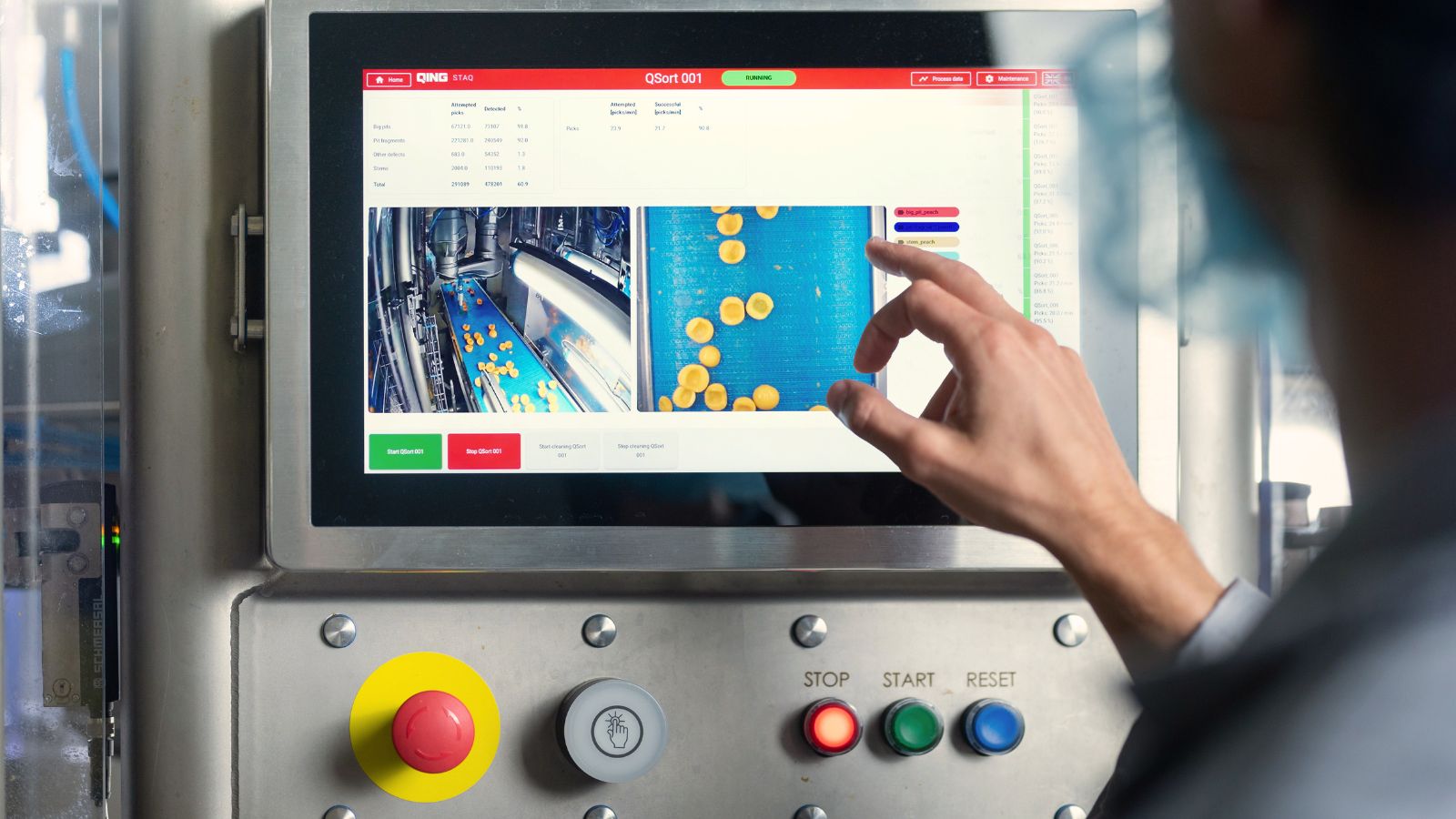
Another form of AI is Vision AI. Vision AI essentially gives a machine “eyes” and the ability to interpret what it sees. A 2D or 3D camera or sensor collects real-time image data from products. A Vision AI model then analyzes this data to, for example, detect, classify, segment, or evaluate products. This makes Vision AI useful for quality control when dealing with a wide variety of products. Such as:
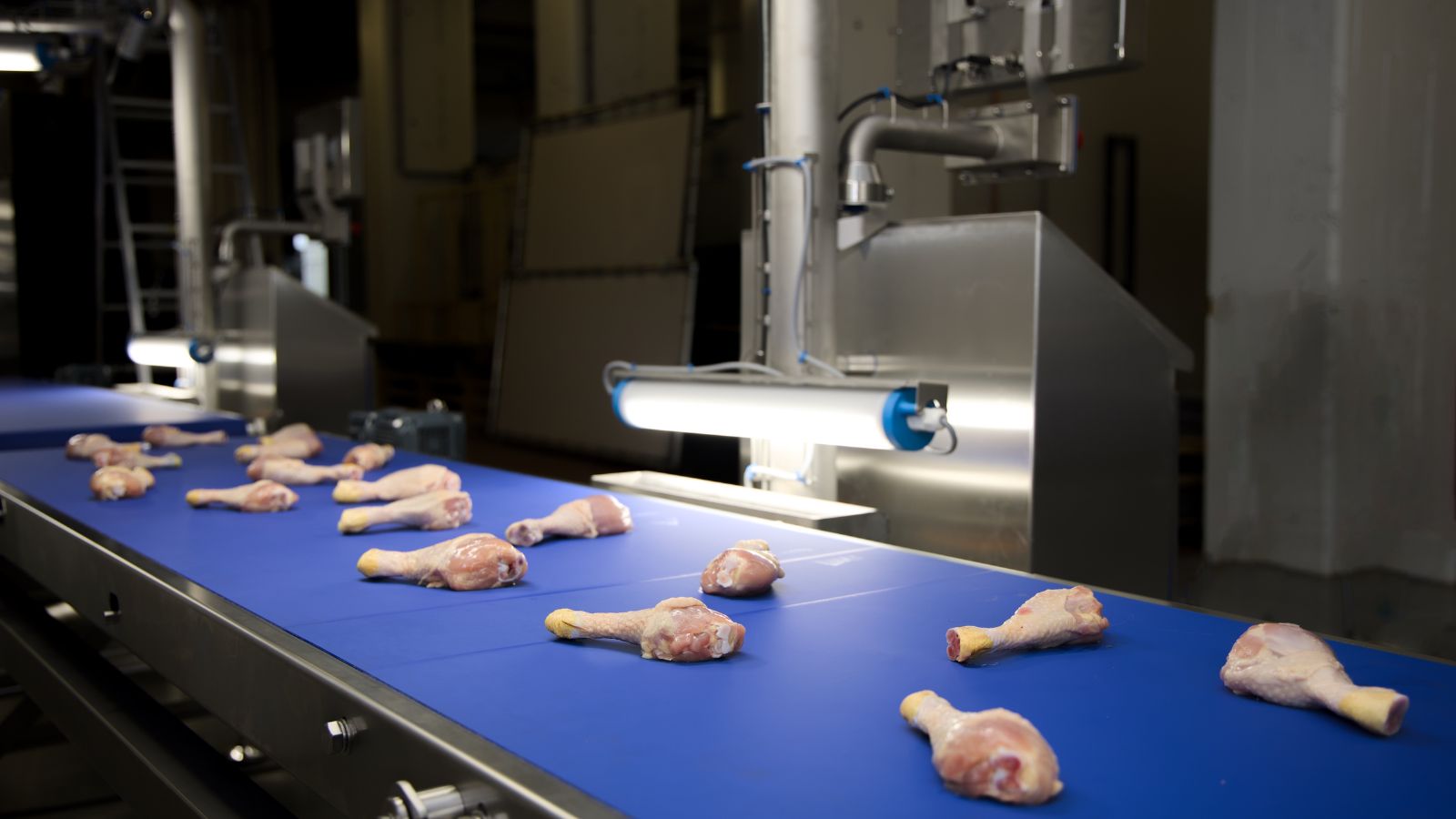
While Generative AI is primarily used to process information and generate new output, Vision AI uses real-time information from the production environment to recognize and evaluate products. Vision AI can be specifically trained to recognize natural product variations and, for example, distinguish between a “good” product and one with a quality defect. Generative AI, on the other hand, is not specifically designed for these well-defined inspection tasks and can generate output that sounds plausible but is actually incorrect.
The observations made by a Vision AI model can be linked to an action. The model detects or evaluates a product and passes this information on to the automation system. A robot can then remove a foreign object or a rejected product from the conveyor belt. In robot picking, Vision AI can determine a product’s location and orientation. That information can then be used to position the robot correctly.
Vision AI thus forms an intelligent layer within an automation system: the technology converts image data into information that can be used to control the production process. To make this possible, QING has developed the STAQ® framework: AI-driven control software that combines Vision AI, cameras, sensors, and robotics to intelligently automate processes. STAQ® stands for “See, Think, Act by QING” and serves as a bridge between data and execution.
When you start using AI, you need to look beyond just the software. You may need to invest in hardware, such as cameras and sensors, and adapt existing machines. But data, knowledge, and skilled professionals are just as important.
AI is not a replacement, but a complement. Technology and craftsmanship must go hand in hand. Otherwise, there is a risk that a new development will not be embraced on the work floor. In addition to technology, the human aspect is therefore just as important. Sufficient attention must be paid to that as well.
By combining technology with the expertise of professionals, you can make innovation a success. That is why people remain an indispensable link in the successful application of AI in the food industry.


Will is happy to help you