



Please provide your contact information, and we'll get back to you shortly.
Thank you!
We'll get back to you about this within a few business days.
Oops! Something went wrong while submitting the form.


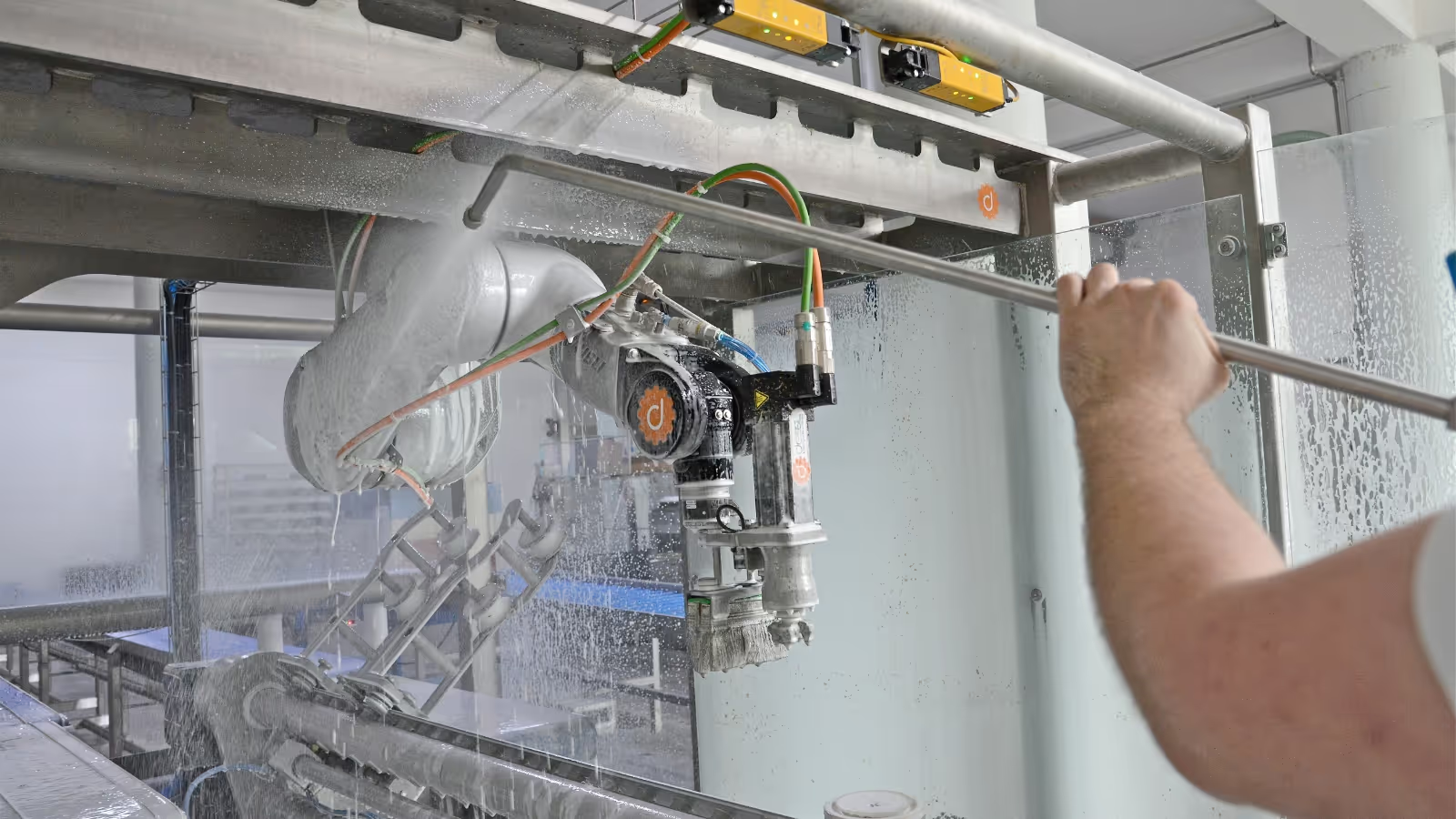
In the food industry, hygiene and food safety are key issues. An indispensable aspect of this is Hygienic Design, where smart designs of machines and robots are essential for thorough cleaning. With smart hygienic design, you minimize the risk of bacterial contamination within production.
Due to the growing labor shortage, demand for automation and robotics solutions is on the rise. Investing in such a solution is already a significant and exciting undertaking. That’s why you don’t want to take any unnecessary risks in any area.
Hygienic Design is not limited to the robots within production processes, but also applies to the entire environment, including floors and walls. Hygienic Design is more than just a set of guidelines that meet food safety requirements. It starts at the concept phase of a production line, right down to the smallest details of the application.
Stäubli's HE series of industrial robots are an excellent example of applying Hygienic Design in the food industry. These robots are specifically designed for hygienic and humid environments, with every aspect of the design focused on minimizing contamination risks.
Stäubli's HE robots are distinguished by:
QING contributes significantly to the development and delivery of the applications of Stäubli's HE-Robots in the food industry. Below are some examples.
A large bakery has installed a compact robotic cell for dough cutting, with an ultra-responsive robot type HE TX90 at its heart. The four-axis high-performance machine from Stäubli can process up to 220 cuts per minute. Just three meters from the production line are the 3D dough position detector, an automatic knife changing station, a cleaning station and, of course, the robot itself.
Before baking in the oven, the TP80 accurately slices the incoming dough according to predefined parameters. Data on the exact position of the dough is transmitted to the robot by an upstream laser scanner. The HE TX90 robot selects the correct knife from the tool-change magazine for each batch. For applications where even 220 cuts per minute are not enough, the cell can be expanded with a second TX90 robot.
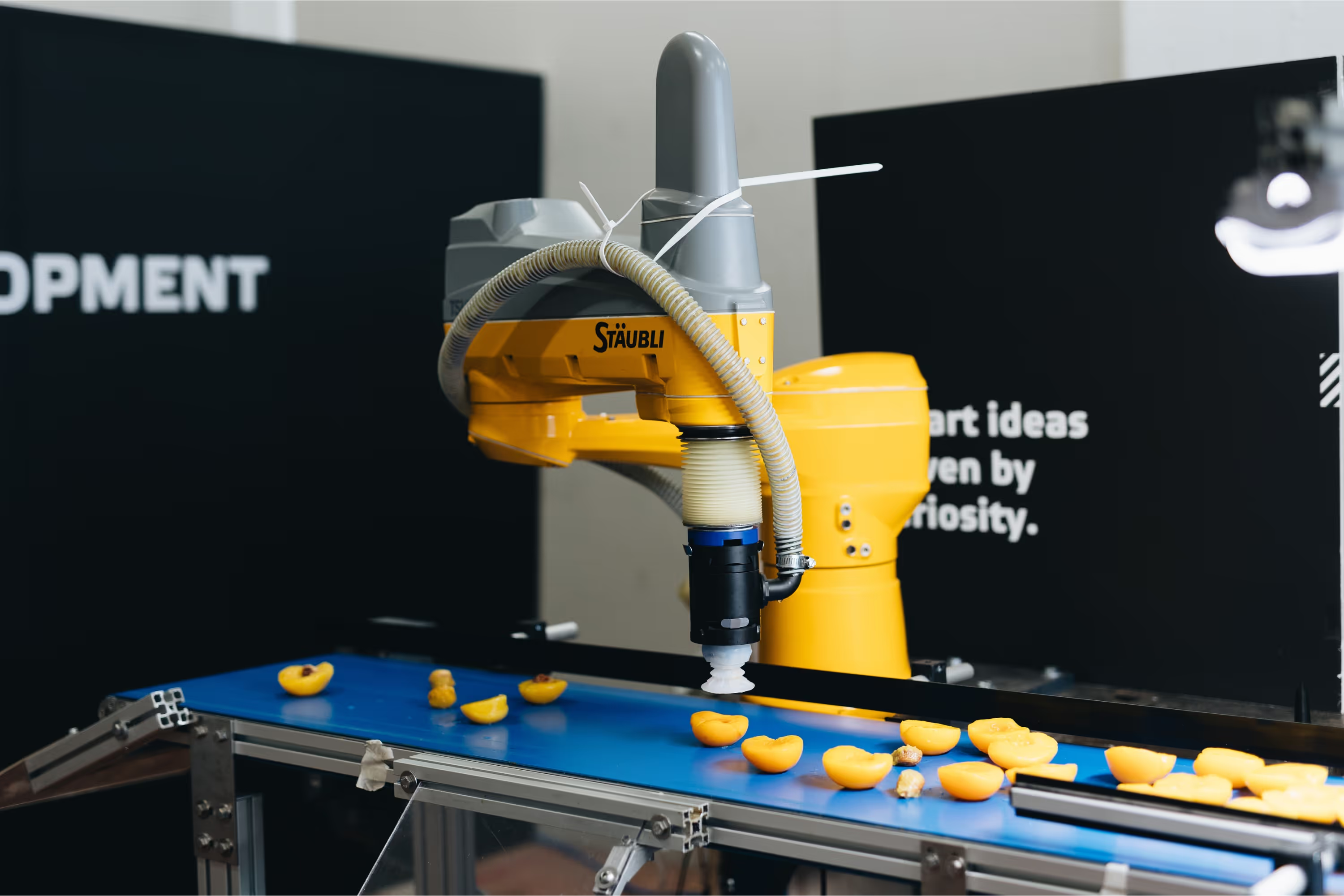
Quality and food-safety are already extremely important and will only increase. The ability to inspect, classify and sort independently of human intervention is becoming of great importance. Whereby a continuous and high level of quality can be guaranteed.
We are seeing a sharp increase in the deployment of the high-speed Stäubli HE robots to contribute to this process. At Agrophoenix, a Greek leading peach processor, Stäubli HE scara robots are used to select rejected peaches from the packing lines and place them on an exit conveyor. A comprehensive AI camera system assesses the peaches passing by on the conveyor and identifies the rejects, which are then removed using the Stäubli robots. In this process, the robots are fully utilized so that maximum production capacity can be realized. High output goes hand in hand with optimally controlled and stable reject output.
Read more about the automated grading process for peacheshere.
In cooperation with Sanovo, we developed a UV-C retrofit kit for a fully automated egg grading machine. This machine not only determines the weight class of the egg, but also checks for dirt and possible cracks in the eggshell. Various bacteria may be present on the eggshell that can be transferred to the parts of the machine. To disinfect the eggs and reduce the contamination of the machine parts, a UV-C module was developed and integrated.
The design of the machine is completely hygienic and includes a CIP system, "Cleaning in place." This system ensures that the machine cleans itself automatically, even during production. Based on the prototype, it has been definitively established that all solutions meet safety requirements. The UV-C module is equipped with various seals and light blocking devices to ensure that the UV-C light does not exit and is not harmful to health, such as causing vision impairment. Read more about the project here.
Curious about the possibilities of Hygienic Design and how it can optimize your production process? Contact Will below, he will be happy to tell you more about it.


Will is happy to help you